
The history of the site Asheville is considering for a performing arts center
Click here to go back to the GAP Report on this issue.
Introduction
The City of Asheville is considering the construction of a new performing arts center on a site it calls “Parkside,” currently used as a municipal parking lot. A recent City presentation charted a timeline that begins in 2006, described the site as having been “targeted for mixed-use development” since that time, and noted that it is not “associated with Urban Renewal,” though it sits “adjacent” to “an area impacted by (that program).”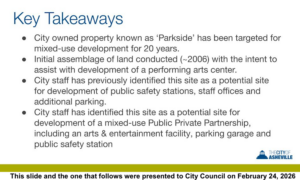
As City Council prepares to vote on a proposed two-year “land hold” that would secure the site while negotiations move forward with private partners, we decided to look more closely at the deeper history of this land, in order to better understand how it came to be what it is today. We believed that the story of this site would have implications for what the City can—and should—do with it now.
The story we found surprised us. It’s the story of the old County jail, an epicenter for the exploitation of Black people through convict labor, and the backdrop to a local lynching. It’s the story of a local Black community formed in the apartheid conditions of Jim Crow. It’s the story of families clawing out a livelihood and property ownership over multiple generations, families that include that of civil rights legend Floyd McKissick. And ultimately it’s the story of how those families were displaced by City-driven processes that were just as destructive—and perhaps even more exploitive— as urban renewal.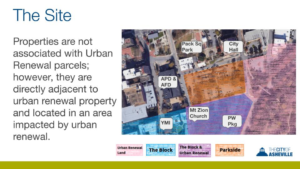
This series explores this history in three parts. Today, Part 1: Who lived on this land before it became a parking lot? Coming soon: Part 2: How did the City acquire this land? And finally, Part 3: What does that history mean for the decisions being made about it today?
Click here to go back to the GAP Report on this issue.